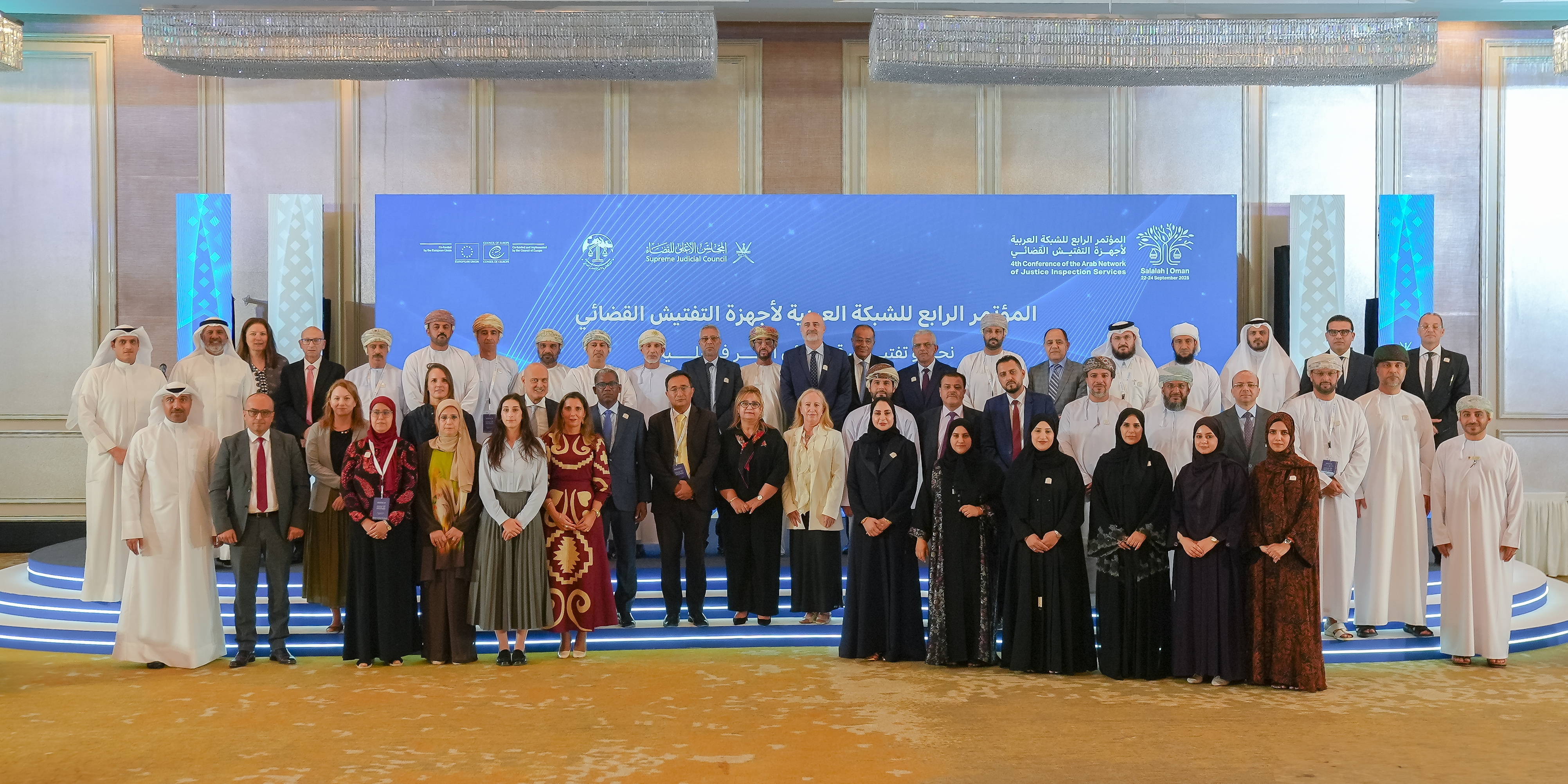
Fourth Conference of the Arab Network of Judicial Inspection Services Held in Salalah, Sultanate of Oman September 22, 23, and 24, 2025
The Arab Network of Judicial Inspection Bodies organized its fourth conference under the theme “Towards a More Effective Inspection of Justice” in Salalah, Sultanate of Oman, over three days: September 22, 23, and 24, 2025. The conference was held under the patronage of His Highness Sayyid Marwan bin Turki Al Said, Governor of Dhofar, and in partnership between the Supreme Judicial Council and the General Directorate of Judicial Inspection in the Sultanate of Oman, the European Committee for the Efficiency of Justice (CEPEJ), the European Network of Judicial Inspection Bodies (RESIJ), and the General Inspectorate of Judicial Affairs at the Supreme Council of the Judiciary in the Kingdom of Morocco.
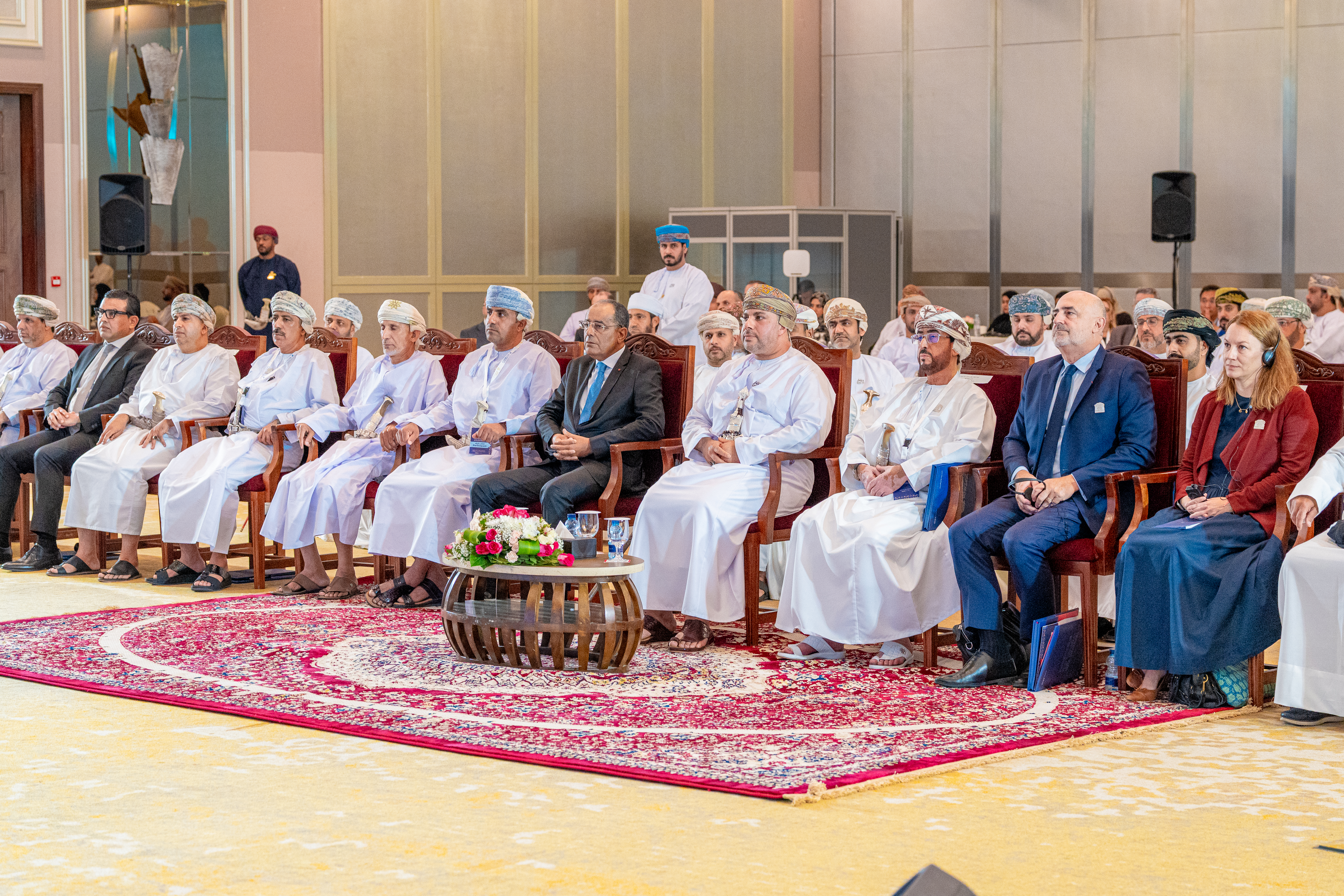
The conference was attended by representatives of the member states of the Arab Network, judicial officials from the Sultanate of Oman, and representatives of judicial inspection agencies from Kuwait and Saudi Arabia. A European delegation also attended, including experts and heads of inspection agencies affiliated with the European Network of Judicial Inspection Services and the European Commission for the Effectiveness of Justice.
The first and second days were divided into four sessions: an opening session and three sessions to present and exchange key international experiences and expertise on three practical cases and the issues they raise:
- Case No. 1 – Public interactions between magistrates and lawyers, and the expression of their legal opinions during meetings and in virtual groups.
- Case No. 2 – The duty of reserve, impartiality and neutrality in the face of conflicts of interest and family, social and political influences.
- Case No 3 – The duty of magistrates in relation to risk of conflicts of interest and the duty of professional training.
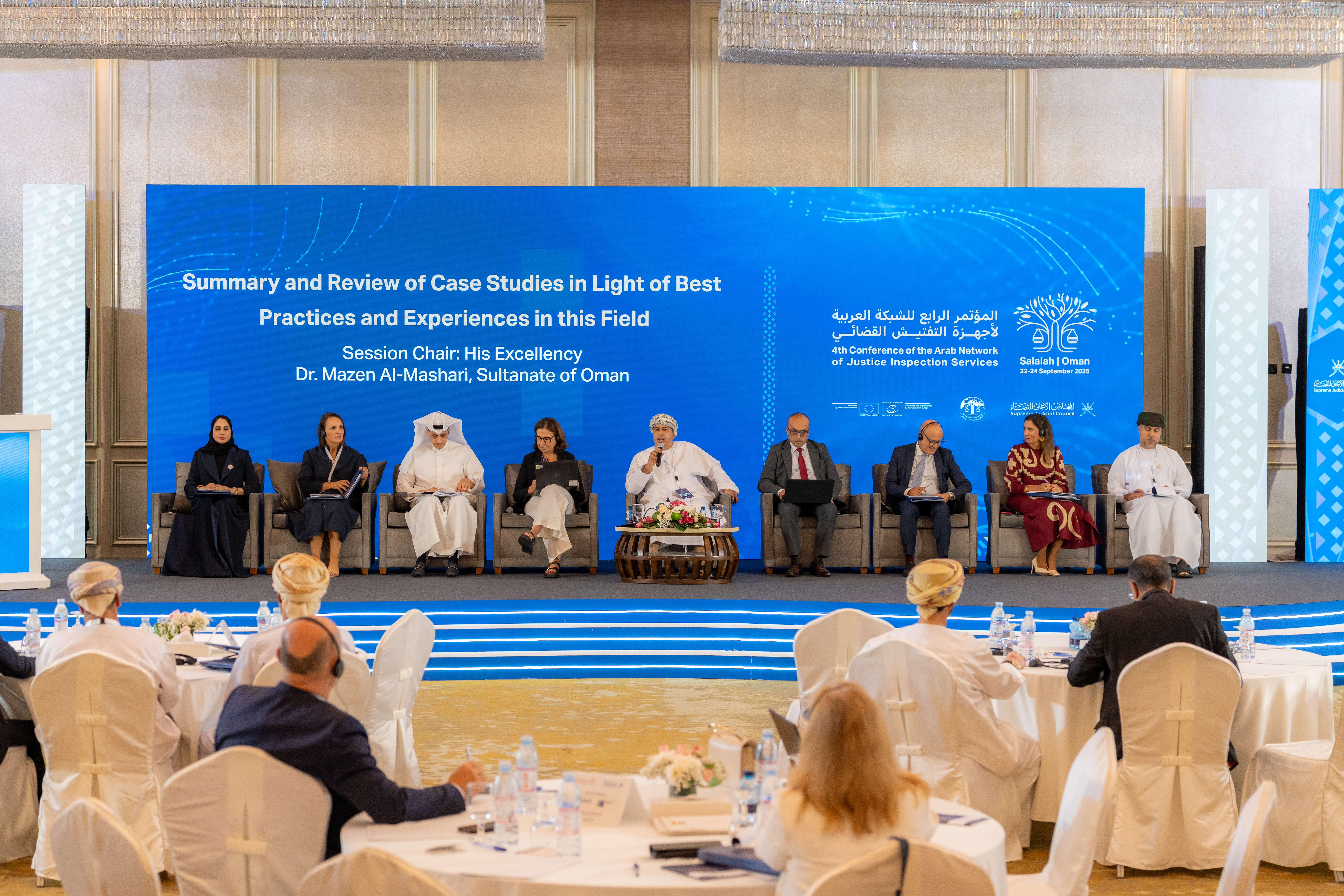
The last day of the conference was dedicated to the synthesis and analysis of academic cases in the light of experiences and best practices in this field. Six rapporteurs presented their most important conclusions and outlined the coordinated approach adopted to resolve the issues raised.
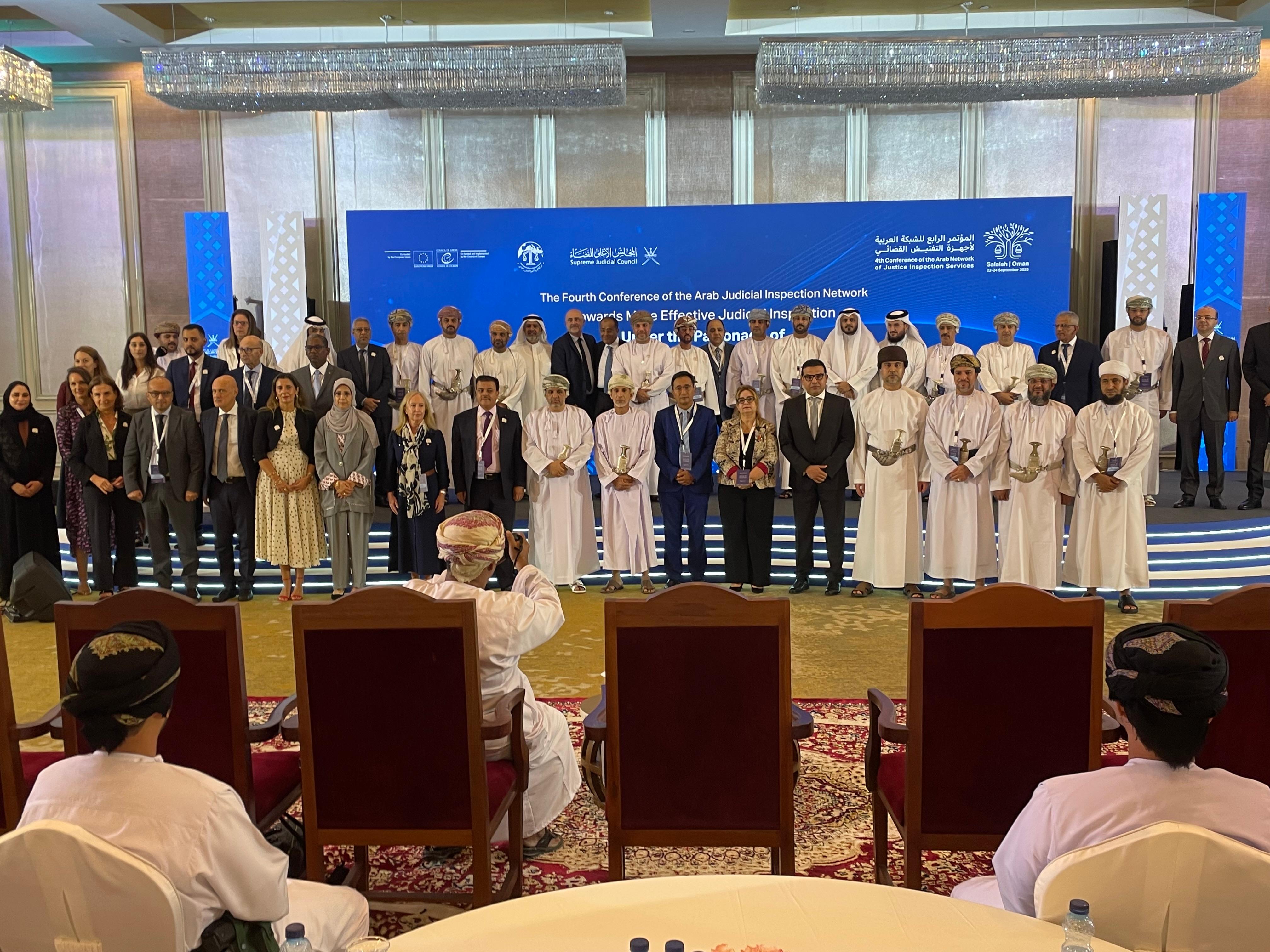
The conference concluded with the ratification of the “Salalah Charter,” a unified ethical charter for members of the Arab Network. This charter serves as a code of ethics for inspectors in Arab countries. It includes six principles that complement each other to ensure the effective operation of judicial inspection bodies in the Arab member states of the network. These principles are embodied in: independence, impartiality, integrity, professional restraint, tact and firmness, competence, and scientific culture.